Ransomware Forensics and Investigation Services
When a ransomware attack cripples your operations, a structured forensic investigation is the only way to move from uncertainty to recovery. Our certified forensic consultants and investigators conduct in-depth analysis of digital evidence while keeping operational continuity in focus.
You can contact DFC 24/7 to connect with a specialist and begin your case with a consultation. However, there is no guaranteed timetable when it comes to digital investigations. Factors such as the complexity of the case, amount of available digital evidence, and time between the incident and the opening of your case can all impact the turnaround time.
Our forensic investigation process includes:
- Pinpointing how the breach occurred to close security gaps.
- Expert analysis of encrypted files and infected systems, identifying malware signatures and forensic footprints.
- Maintaining a rigorous chain of custody when inspecting digital evidence to ensure smooth legal proceedings.
- Delivering a detailed forensic investigation report, tailored for insurance claims, regulatory compliance, and law enforcement.
DFC’s team of experts will work to collect, preserve, and analyze digital evidence that remains from the attack. This data is used to identify how a threat actor infiltrated the system and which files have been compromised or affected. This can help contain the attack and identify network vulnerabilities that need to be patched.
The investigation is documented to preserve a clear record of the forensic process. A chain of custody is maintained to record each time a piece of evidence is handled, which helps uphold evidentiary integrity. Furthermore, files and devices are imaged to create exact copies, allowing investigators to conduct analysis without jeopardizing the original evidence. At the conclusion of your case, you will receive a detailed forensic report that can help support insurance claims, regulatory compliance, and legal proceedings.
Don’t leave your recovery to chance. Contact DFC’s certified consultants for forensic analysis and a ransomware recovery plan.
Get Help Now
Response within 10 minutes
WORK WITH OUR EXPERIENCED DATA BREACH RESPONSE TEAM

Ransomware
Removal
Experts examine existing digital evidence to determine an appropriate method to diagnose and remediate the ransomware incident.

Incident
Investigation
Investigators analyze the nature, scope, impact, and origin of the ransomware attack to determine how the attack unfolded.

Documentation
for Insurance
Professional consulting and support can help you prepare documentation to comply with insurance requirements.

Data Breach
Prevention
A thorough audit is conducted to determine system vulnerabilities and implement stronger protections against future attacks.
Suspect a Data Breach?
We offer immediate, 24/7 assistance from our team of data breach experts.
We help you regain control of your data
Digital Forensics Corp. computer forensics experts will:
- Investigate whether your sensitive data has been exposed
- Detect how your network was breached
- Collect the evidence needed to fight back
- Assist in responding to ongoing threats
- Recommend changes to security procedures
- Prevent future attacks on your network
Ransomware Removal and Recovery Services
When your data is held hostage, restoring access and recovering potential loss are the most immediate priorities. As a premier ransomware removal consultancy, we help organizations stop and handle ransomware attacks by taking swift, coordinated action and delivering an end‑to‑end cyber solution that prioritizes business continuity and data preservation above all else.
Our specialized recovery team focuses on three critical pillars:
- Active ransomware removal, ensuring the attack is completely neutralized before restoration begins, preventing re-encryption.
- Data and file recovery through advanced recovery tools and proprietary backup techniques. Using secure restoration and decryption practices, we prioritize data integrity and speed.
- System restoration to resume full operational functionality while implementing security patches to provide long-lasting recovery and protection
Like the timeline of your investigation, recovery of lost data cannot be guaranteed. In some cases, files can be decrypted or recovered from previous data backups through secure restoration practices.
This approach aims to contain and disarm the threat to help you mitigate the damage and regain control of your data quickly.
Ransomware Protection and Prevention Services
Defending your organization requires more than just reactive fixes; it demands relentless cybersecurity surveillance. DFC’s ransomware protection services integrate real-time network monitoring, access control reviews, and employee awareness training to help detect and address threats before they breach your perimeter. By closing security gaps in your infrastructure and fostering a culture of security awareness, your network can become significantly more resilient against online threats.
The team at DFC can help you avoid similar threats in the future through ongoing monitoring and expert cybersecurity guidance. Your current system protections, access controls, and employee training procedures can be assessed and improved in real time to strengthen your resilience. This helps organizations close the security gaps in both their digital systems and the humans responsible for operating them.
Why Is Ransomware Dangerous?
Ransomware is dangerous because it can disrupt business continuity by encrypting essential digital business data. These attacks can trigger financial issues, harm business reputation, and create compliance issues. The following sections elaborate on the impact of ransomware.
- Financial implications. Paying a ransom doesn’t guarantee that you will get your files back, and the FBI discourages business owners from fulfilling hackers’ demands. Even if you don’t pay the ransom, the financial costs can result from prolonged downtime.
- Operational downtime. Inability to access files can impact operational efficiency and business continuity. Under such circumstances, even a data backup may not always fill the gaps. Full recovery can take a significant amount of time, resulting in a loss of customers and business credibility.
- Compliance issues. Many cybersecurity regulatory standards have been developed to enforce robust security controls in organizations’ systems and networks. Failure to comply with these regulations can result in severe fines and other penalties.
- Reputational damage. A ransomware attack can damage an organization’s reputation, causing customers to lose trust and potentially leading to long-term financial losses.
- Data loss. If the ransom isn’t paid or the adversary fails to provide the decryption key, the victim may permanently lose access to their critical data.
Types of Ransomware Attacks
Ransomware has various types. The following sections take a deep dive to explore each type.
- Crypto ransomware. Crypto ransomware uses cryptography to encrypt crucial data and demands a ransom to resume access, often in the form of cryptocurrency.
- Locker ransomware. Instead of encrypting files, locker ransomware prevents users from accessing entire devices and systems.
- Doxware. These attacks also involve stealing confidential data. But instead of just restricting access, perpetrators threaten disclosure if a ransom isn’t paid.
- Scareware. Scammers utilize psychological manipulation by sending fake malware detection messages to trick victims into purchasing fraudulent recovery services.
- Ransomware-as-a-Service. Cybercriminals sell ransomware kits, allowing threat actors with limited technical skills to execute sophisticated attacks.
What are the Red Flags of Ransomware?
There are some common warning signs that may indicate a ransomware attack or infection. Look out for the following red flags:
- Unrecognized changes to files, such as unknown names, icons, and extensions
- Files are not located in their actual locations or folders
- Access code requirement to open files
- Unusual device behavior and performance
- Login credentials don’t work for unknown reasons
- Popup messages requesting action or payment to decrypt files
Today’s threats frequently mimic normal system behavior, making them difficult to identify without advanced monitoring tools. If you have fallen prey to this situation, professional ransomware detection and response guidance can help.
How Should Companies Handle Ransomware?
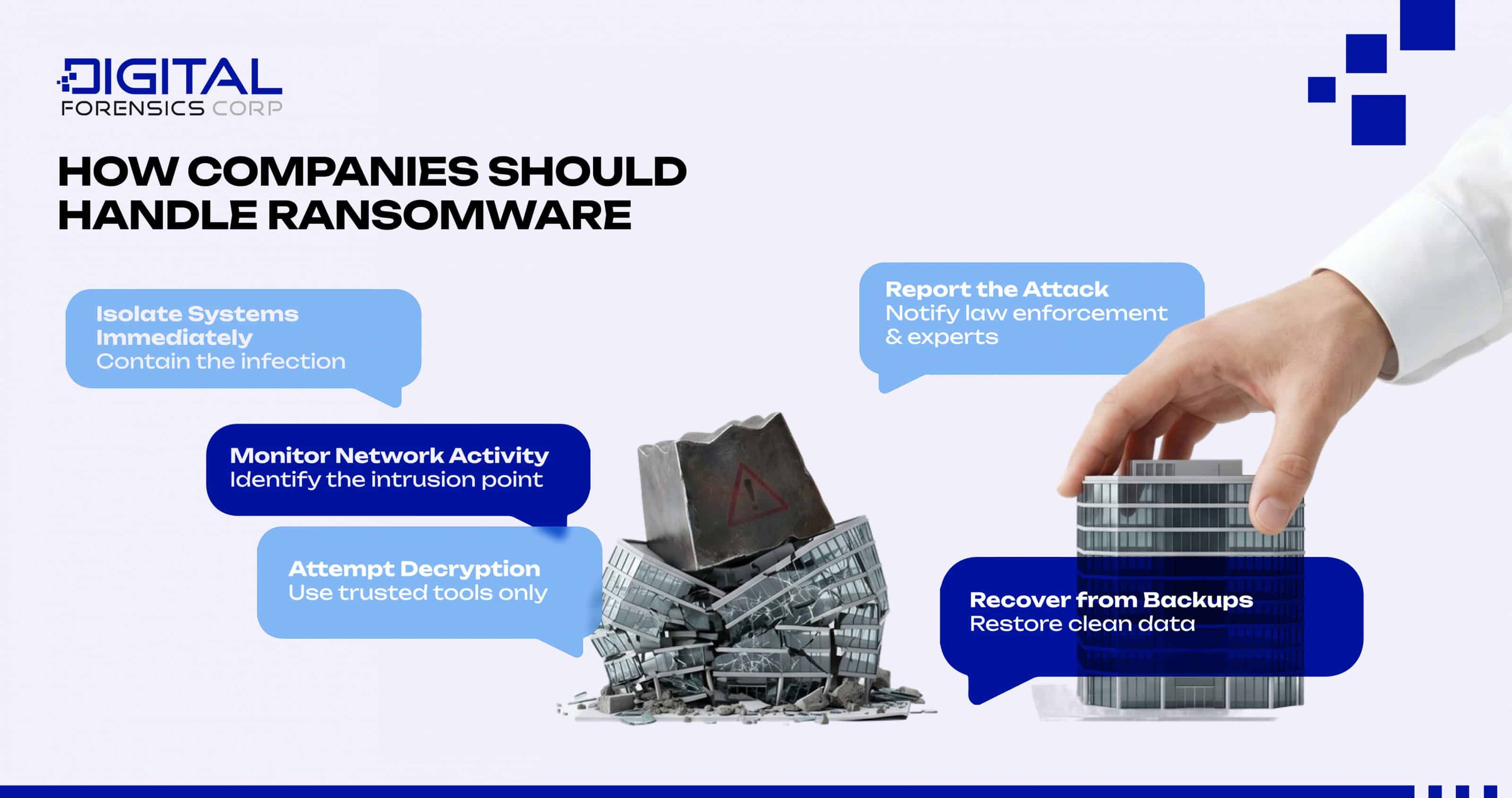
Handling ransomware requires a wise and sophisticated approach. Organizations can take several steps to prevent ransomware attacks.
- Isolate systems. You should immediately isolate affected systems from your network to help prevent further infection.
- Monitor network activity. Look for unusual behavior on your network to try to discover where infiltration took place and what data is being accessed.
- Report the attack. Report the attack immediately to the appropriate law enforcement, consumer protection, and regulatory bodies.
- Recover from backups. Backup files that are separate and secure from the attack can help you limit downtime and resume business operations.
- Attempt decryption. Decryption tools may be available for some variants of ransomware. Consider whether a reputable tool is applicable to your situation.
What To Do If You Receive a Ransomware Email
If you receive an email that contains ransomware warning signs:
- Avoid opening any links or attachments.
- Disconnect the affected devices.
- Report the email to the appropriate authorities.
If you received the email in your work account, inform your company’s IT department of the issue. It is important for businesses to have a response plan prepared before the onset of an attack and activate protocols immediately upon discovery.
How to Prevent Ransomware Attacks and Protect Your Data
The best ransomware defense and ransomware prevention services have become a necessity. The following practices can help you strengthen your resilience:
- Be wary of phishing scams. Don’t open any links or attachments in unsolicited emails. Enable spam filters to help prevent phishing attacks.
- Use a reputable antivirus program from legitimate providers and scan your devices regularly.
- Use whitelisting softwarethat prevents the execution of any software that is not pre-approved.
- Configure your firewall to block malicious traffic or malicious IP addresses and deploy security features like endpoint protection and multi-factor authentication.
- Create backups. Make sure these are stored in a separate, secure location so that you can access them if your systems have been encrypted.
- Segmentation is a good security practice to prevent attack escalation. Applying segmentation can help limit or block the spread to other systems.
- Always keep your OS and other applications updated and monitor your programs for any unrecognized downloads.
- Train your employees to properly identify, avoid, and respond to ransomware threats. Establish clear protocols so that response efforts can be enacted effectively.
To protect your company from ransomware, you need to enhance the cybersecurity of your systems and networks.
Stop waiting for the next alert. Contact Digital Forensics Corp. to secure your data, reputation, and foundation against the evolving landscape of cybercrime.

Your Private Investigator will call you shortly.